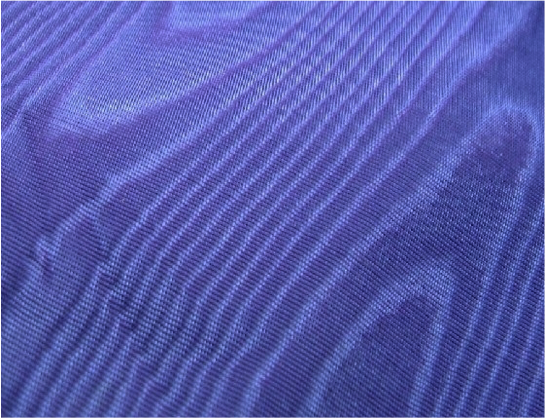
If there is one star in the headdresses of these last seasons, it is silk flowers. Elegant and refined, they give your headdress a sophisticated and distinguished air. Honestly, I am in love with these flowers, well, and with velvet ones too. Today we will talk about
silk taffeta and the most commonly used types.
Their diversity in texture makes the variety of silk flowers infinite, flowing or rigid, depending on whether we are talking about pongée or crepe silk.
In other posts, we talked about different types of silks; today we will talk about Taffeta, a fine, dense fabric with a simple weave, a shiny appearance, and a certain stiffness. Its origin seems Persian, and it has been well-known since antiquity. It is a fabric that wrinkles easily but provides a lot of volume, so you will find it in cocktail, evening, and wedding dresses. Thus, it will be one of the ones we use most to make our silk flowers if we want to make them with the same fabric as the dress.
Silk taffeta and types
Among taffetas, we find bourrette, which comes from silkworm cocoons, so the threads are very short and therefore its weaving method is irregular, presenting small knots. It is dense and quite resistant.

Pongée, originating from China, is soft, light, and dense but not very resistant; it is usually used for shirts and as a base for painting and printing. So if you want a different
silk flower, where dyeing is the protagonist, pongée can be interesting.
Shantung, as its name indicates, comes from China, with irregular silk threads, from the tasar worm, with a crisp texture and a rough feel.
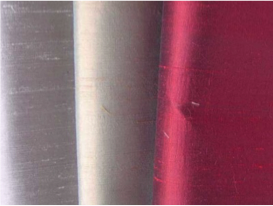
Crepe, the most well-known silk taffeta
Crepe is one of the best known, also called crêpe, it is a thicker and more resistant silk, with a rough appearance and not shiny as was the case with the previous ones. There are several types of crepe, from Morocco, China, India, and Georgette.

Ottoman, is very thick and resistant, so it is usually used for upholstery.
Faille, is a silk whose weave forms a ribbed texture, medium weight, shiny and of high quality. It has no right or wrong side and is used in haute couture. Its most well-known variety is Moiré, which is a type of silk Faille with a watered effect that looks different depending on the light.