Today we're going to focus on the
straw hat, specifically on one of the quintessential straw hats, which became very popular last century. We're going to uncover the origin of this
hat, which is not what first comes to mind when we think of it. We're talking about the "Panama Hat," or rather, the Ecuadorian toquilla straw hat.

The hat, known worldwide as the Panama Hat, owes its nickname to the trip made by then-U.S. President Theodore Roosevelt to Panama in 1906, for the purpose of reviewing the construction of the historic Panama Canal. The American representative was wearing a straw hat that became extremely popular after appearing in all the photographs of his trip to the country, and which the press erroneously called "Panama Hat."
The thing is, this hat originated in Ecuador; it is made from toquilla straw of the "carludovica palmata" palm, which is cultivated on the coast of Ecuador (specifically in the province of Manabí).
This hat, which was a trend for the bourgeoisie of the northern hemisphere during the 20th century, is once again part of many people's looks, and the debate about its origin is open.
Ecuadorian blogger Cristina Maag launched a campaign on social media to highlight the importance of Manabí in relation to the origin of the straw hat; she proposed the hashtag #EcuadorHat and gained the support of influencers such as designer Agatha Ruiz de la Prada, Iris Apfel, and later even Aerosmith's singer, Steven Tyler himself.
Angélica Molina, executive of the Homero Ortega hat factory, says that this hat "has deep ancestral roots." She traces its origins back to when the inhabitants of the Ecuadorian coast "used a 'toca' similar to 'bat wings,' made with light and fresh elements, which served to protect them from the sun." This changed when the Spanish arrived in the new continent; "Ecuadorians realized that it would be ideal to make hats in the Western style with this material and weaving technique," and thus the toquilla straw hat came into being, "becoming a unique product, the result of the encounter of two cultures."
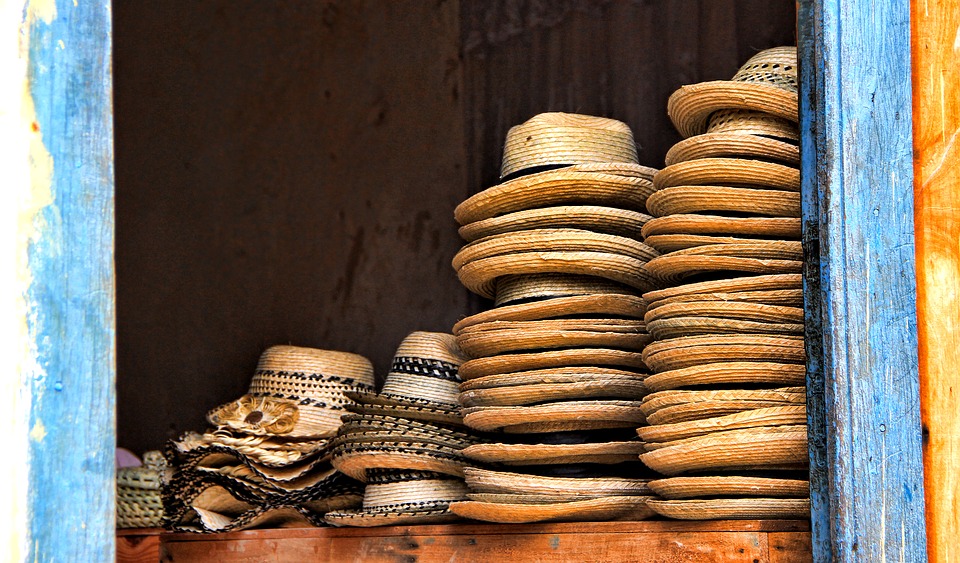
In 2012, Ecuador managed to get the United Nations Educational, Scientific and Cultural Organization (UNESCO) to include the traditional weaving of the Ecuadorian toquilla straw hat in the Intangible Cultural Heritage of Humanity, which allowed for the official recognition of the mythical hat's origin. In Paredes' words, regardless of what it's called, "if it's made of toquilla straw, if the weave is handmade, it's our product."