In our second installment of “
Feathers Seville” we are going to look at the rest of the most well-known feathers.
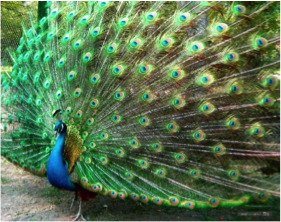
Peacock (male): has a bright blue head crowned with a crest of feathers. Its blue plumage with greenish reflections, when fanned out, opens into a spectrum of golden, blue, and greenish hues. It can reach up to 3m in length. The female has an ashy color with a whitish neck and green reflections on the chest; as you can imagine, she is less striking.
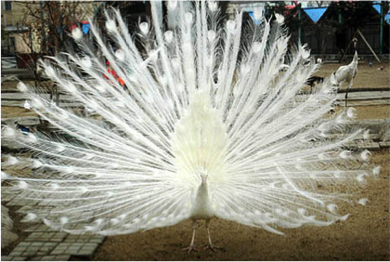
 Albino Peacock
: Emerged in the early 19th century due to its captivity, presenting white spots in its plumage, which initially received a negative response, but was later taken advantage of by breeders to create original shades in the plumage. From these crossbreeds emerged the albino peacock that carried this gene.
Honestly, I love them; they are beautiful with these colors and this airy texture. You won't find these Seville feathers of better quality than in our online
headpieces store.
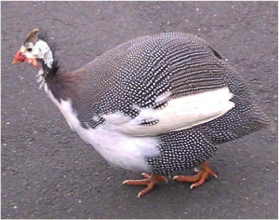
 Guinea Fowl
: There is hardly any difference between the male and female; their plumage is bluish-gray or pearl gray with white, sequin-shaped spots.
Red Rooster: There are differences between the domestic and wild red rooster. The wild one has more intense colors. With orange tones, it is crowned with red feathers and a dark metallic green tail. With white tufts at the base. The belly is opaque black while the upper part combines bright blue, green, red, and blackish-brown.
It has the softest quill of all, making it more difficult to work with when shaping.
DUCK FEATHERS HAVE THE HARDEST QUILLS, WHICH GIVES US MORE POSSIBILITIES FOR SHAPING.
Peking Duck: It is one of the most well-known, and its plumage is completely white.
Mallard Duck: also known as the common duck. It is characterized by its green head, white collar on the neck, its chest is chestnut with purple tones, the rest of the plumage is grayish except for the upper part of the tail. The female has duller tones. This
type of feathers is usually sold more in bags; the most well-known are antenna feathers.
I will be back soon to tell you more about Seville feathers and the profession of a feather worker.